

Welcome to the exciting realm of the Chicken Road Game Math Signals https://chickenroad-game.co.nz/, where the delightful combination of strategy and mathematics intertwines to create an unforgettable gaming experience. In this article, we will delve deeply into the mathematical signals presented in the Chicken Road Game, explaining how they enhance gameplay, facilitate learning, and make the experience enjoyable for players of all ages.
Understanding Chicken Road Game
Before we dive into the mathematics behind the game, it’s important to understand what Chicken Road Game is. This engaging online game challenges players to navigate a chicken across a busy road filled with various obstacles. The primary aim is to help the chicken reach its destination safely, prompting players to think critically and make quick decisions. With its engaging gameplay, Chicken Road has not only entertained but also educated players in various skill sets, particularly mathematics.
The Role of Math in Gaming
Mathematics plays a pivotal role in all types of gaming, and Chicken Road Game is no exception. From simple addition and subtraction to advanced concepts of probability and statistics, players encounter a multitude of mathematical signals that influence their decisions. Here’s how math shapes the gameplay:
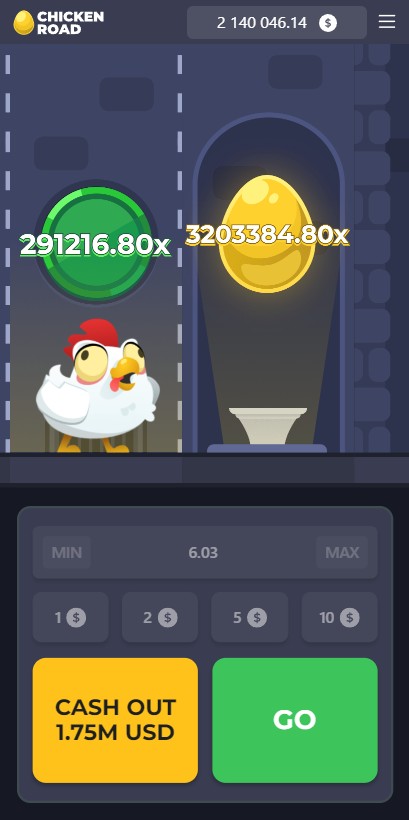
- Counting and Number Recognition: As players navigate the game, they must count the number of cars, assess the speed of the oncoming traffic, and recognize numbers associated with scores. This fundamental skill is essential for younger players, helping them develop number recognition in a fun environment.
- Patterns and Sequences: Players notice patterns in traffic flow, such as when cars appear and when it’s safe to cross. Identifying these sequences is crucial; it encourages players to develop logical reasoning skills and predict outcomes based on their observations.
- Geometry and Spatial Awareness: The game’s layout introduces elements of geometry as players learn about distances, angles, and positioning. Understanding how to position the chicken appropriately in relation to the moving objects creates a natural introduction to geometric concepts.
- Statistics and Probability: Players often need to evaluate the likelihood of safe crossing based on traffic patterns. This involves understanding probability—calculating the chances of certain events happening, which directly influences gameplay strategy.
- Time Management: In many game modes, players need to make quick mathematical calculations to decide the best moment to cross. This aspect of gameplay promotes time management skills and quick thinking.
Math Signals: A Deeper Dive
In Chicken Road Game, “math signals” refer to the implicit and explicit mathematical cues that guide players in making decisions. These signals manifest in various ways:
1. Immediate Feedback
As players engage with the game, they receive immediate feedback on their decisions, which is an essential component of learning. For instance, if a player fails to time their crossing correctly, the game provides real-time consequences, allowing them to analyze what went wrong and recalibrate their approach. This feedback loop is vital for developing mathematical thinking.
2. Incremental Challenges
The game is designed with progressively challenging levels that incorporate different mathematical signals. As players advance, they encounter more complex problems that require an enhanced understanding of mathematics. This incremental approach ensures that players are not overwhelmed while still challenging them to grow their skills.
3. Encouragement of Strategic Thinking
Math signals in Chicken Road Game encourage players to think strategically. They must weigh options, assess risks, and calculate potential outcomes, integrating various mathematical principles into their gaming strategy. This cultivation of strategic thinking is central to solving complex problems in both gaming and real-life scenarios.
Educational Value of Chicken Road Game
Chicken Road Game serves as an exceptional educational tool, making it ideal for classroom settings and at-home learning. Educators and parents can utilize this game to teach fundamental math concepts in a fun and engaging way. Here are some benefits:
- Engagement: The game captivates players, making them eager to learn and improve their skills while they play.
- Interactive Learning: Players can learn through experience, applying mathematical concepts in real-time.
- Collaboration: The game can also be played in groups, encouraging teamwork and communication, essential skills in any learning environment.
Conclusion
In summary, Chicken Road Game is much more than just a fun multilevel game; it’s a comprehensive learning tool that incorporates essential math skills and promotes cognitive development through interaction with mathematical signals. By navigating the dynamic challenges it presents, players not only enjoy a thrilling experience but also enhance their mathematical understanding in an engaging context. Whether you are playing for leisure or educational purposes, Chicken Road Game proves itself as an invaluable resource, blending entertainment and education seamlessly.
So, ready your strategies, sharpen your math skills, and venture into the vibrant universe of Chicken Road Game! Let’s cross the road and embrace the math!

